
The CEO’s Dilemma: Winning the War on Digital Complexity
As a business owner, you’ve embraced digital transformation. You’ve invested in tools to make your teams more productive, your sales process more efficient, and your customer service more responsive. Yet, a creeping complexity has likely entered your operations. A tool for sales (CRM), another for project management, a third for internal chat, a fourth for HR, and a dozen other niche applications, each with its own monthly subscription and login.
This phenomenon, known as ‘application sprawl’ or ‘software bloat,’ is the unintended consequence of well-meaning innovation. While each tool was adopted to solve a specific problem, their collective weight now creates a new, more insidious set of challenges: escalating operational expenditure (Opex), fragmented data that hinders decision-making, and a dangerously expanded security attack surface. The very tools meant to streamline your business are now inadvertently creating friction and risk.
The strategic imperative for modern enterprises, particularly in sectors like Manufacturing, Construction, and Retail where operational efficiency is paramount, is no longer about adding more software. It’s about smart, strategic consolidation. It’s about moving from a chaotic collection of apps to a single, unified operational platform. This isn’t a step back; it’s a leap forward into control, clarity, and cost-efficiency.
The Hidden Costs of Application Sprawl
The visible cost of multiple software subscriptions is just the tip of the iceberg. The true expense of application sprawl is buried in the inefficiencies and risks it creates across your organization. Let’s dissect these hidden costs that directly impact your bottom line.
Direct Financial Drain: Death by a Thousand Subscriptions
Consider the math. A CRM at $50/user/month, a project management tool at $25/user/month, a communication platform at $15/user/month, and various other smaller tools can easily exceed $100-$150 per employee, every single month. For a company with 50 employees, this amounts to over $60,000 annually in recurring software costs alone. Often, these costs are spread across departmental budgets, masking the true total. Furthermore, this model creates vendor lock-in and leaves you vulnerable to unpredictable price hikes from multiple providers.
Operational Inefficiency: The Productivity Paradox
The promise of SaaS tools is increased productivity. The reality of using too many of them is the opposite. Your team is forced into constant ‘context switching’—jumping between tabs and applications, copying and pasting information, and trying to reconcile data from different sources. A sales update in the CRM needs to be manually communicated on Slack and then re-entered as a task in the project management tool. Each manual transfer is a point of potential error and a waste of valuable time that could be spent on revenue-generating activities.
Application sprawl isn’t just a line item on your budget; it’s a hidden tax on your team’s productivity and a gaping hole in your security perimeter.
Security and Compliance Nightmares
From a risk management perspective, application sprawl is a CEO’s nightmare. Every new application is another potential entry point for a cyberattack. Managing user permissions across dozens of platforms is complex and prone to error. When an employee leaves, does your team remember to revoke their access from every single system? A forgotten login to a minor application can become a major security breach. Furthermore, with customer data scattered across multiple cloud services, proving compliance with regulations like GDPR becomes an arduous and often impossible task.

The Strategic Imperative: Shifting to a Unified Platform
The antidote to application sprawl is not simply cutting tools, but strategically consolidating them onto a unified business platform. This isn’t about finding a single application that does everything poorly; it’s about adopting a powerful, flexible ecosystem where core business functions like CRM, project management, communication, and document management operate cohesively from a single source of truth.
From Silos to a Single Source of Truth
Imagine your sales, operations, and finance teams all working from the same, real-time data. When a salesperson closes a deal in the CRM, it automatically creates a project for the delivery team, populates it with all necessary client information, and alerts the finance department—all within the same system. This eliminates data silos, reduces miscommunication, and provides you, the leader, with a holistic, accurate view of your entire business pipeline from a single dashboard.
Fortifying the Fortress: Centralized Security and Control
Consolidation dramatically shrinks your security vulnerabilities. Instead of managing ten different sets of user permissions, you manage one. Instead of ten systems to monitor, you secure one. User onboarding and offboarding become simple, clean processes, ensuring that access is granted and revoked instantly and completely. This centralized control is not just more secure; it’s also far easier to audit and manage, giving you true peace of mind.
The Consolidation Blueprint: A CEO’s 4-Step Action Plan
Embarking on a consolidation journey requires a strategic, top-down approach. It’s a business initiative that leverages technology, not the other way around. Here is a practical blueprint to guide your process.
Step 1: Conduct a Comprehensive Application Audit
You cannot manage what you do not measure. Task your finance and IT leads to compile a complete list of every software application the company pays for. Identify redundancies (e.g., three teams using three different file-sharing services), underutilized licenses, and ‘zombie’ subscriptions that are still being paid for but no longer used. Quantify the total monthly and annual cost.
Step 2: Identify Your Core Operational Spine
What are the absolute non-negotiable processes that drive your business? This typically includes customer relationship management (CRM), project/task management, and internal communications. These form the ‘spine’ of your operations. Any platform you consider must excel at these core functions.
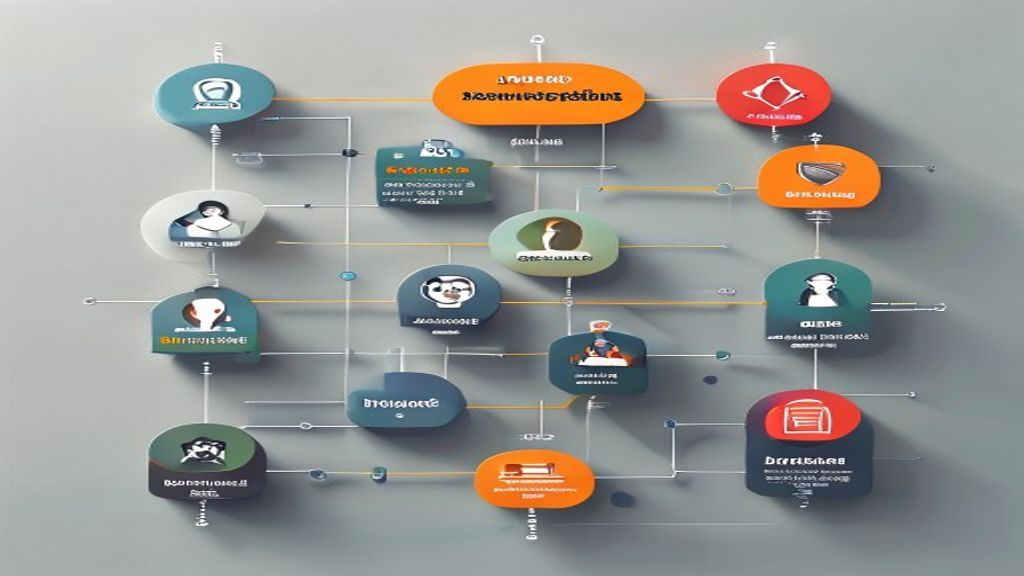
Step 3: Evaluate Unified Platform Solutions
When evaluating platforms, look beyond the feature list. Assess for flexibility and customizability. A rigid, one-size-fits-all solution will only replace one set of problems with another. The right platform should be adaptable to your unique workflows, especially in specialized industries like Manufacturing or Construction. Can it be configured to match your specific sales stages, production processes, or project milestones?
Step 4: Phased Implementation and Change Management
This is not an overnight switch. A successful transition requires careful planning and robust change management. Involve key stakeholders from each department in the planning process. Communicate the ‘why’ behind the change—the benefits of reduced friction, better collaboration, and enhanced security. Roll out the new platform in logical phases, starting with a pilot group or a single department to ensure a smooth transition.
The most successful consolidation projects are led as business transformation initiatives, not IT projects. The goal is to re-engineer workflows for efficiency, with technology as the enabler, not the objective.
The ROI of Consolidation: A Hypothetical Case Study
To illustrate the tangible impact, consider ‘Precision Fabricators,’ a hypothetical mid-sized manufacturing company with 100 employees.
The Challenge: They were using a premium CRM, a separate project management tool, a popular chat application, and a cloud storage service. Their total software Opex was approximately $14,500 per month. Data was constantly out of sync between the sales team’s CRM and the production team’s project boards, leading to costly errors and production delays. Offboarding employees was a 10-step checklist nightmare for HR and IT.
The Solution: They consolidated onto a single, unified business platform that included robust CRM, project management, communication, and HR modules.
The Results:
- Opex Reduction: Their monthly software bill dropped from $14,500 to $6,500, a 55% reduction, resulting in an annual saving of over $96,000.
- Efficiency Gains: Automating the handover from sales to production eliminated an estimated 20 hours of manual data entry and coordination work per week across the team.
- Enhanced Security: The employee offboarding process was reduced to a single action within the platform, immediately revoking all access and eliminating a critical security loophole. The centralized audit log also simplified compliance checks.

From Theory to Reality: The Toco Solution Advantage
Understanding the ‘what’ and ‘why’ of application consolidation is the first step. Executing it effectively is the next. A strategic shift of this magnitude requires more than just new software; it requires a partner with deep expertise in both business process engineering and technology implementation.
At Toco Solution, this is our core focus. We specialize in guiding businesses in the Manufacturing, Construction, and Retail sectors through precisely this type of digital transformation. We don’t just sell software; we deliver operational excellence. By leveraging powerful and highly customizable platforms like Bitrix24, we provide a single, unified ecosystem that replaces your fragmented application landscape.
Our process begins by understanding your unique workflows, pain points, and business goals. We then configure and customize a solution that automates your processes, provides a single source of truth for your data, and delivers the cost-efficiency and security that your business demands. We handle the technical implementation, data migration, and team training, ensuring your transition from complexity to clarity is seamless and successful.
Take Control of Your Digital Infrastructure
Your business operates as a single, unified entity. Shouldn’t your technology? The era of fragmented applications and spiraling subscription costs is over. If you’re ready to transform your digital infrastructure from a costly liability into a streamlined strategic asset, our team is here to guide you.
Schedule a complimentary, no-obligation consultation with a Toco Solution strategist to map out your consolidation roadmap. Contact Us Today.