

The Unspoken Cost of a Manual Sales Process
As a Sales Director, you are the architect of your company’s revenue engine. You recruit, train, and motivate a team of high-performers. Yet, you likely spend an inordinate amount of your time fighting fires that shouldn’t exist: chasing reps for updates, questioning the accuracy of forecasts built on disparate spreadsheets, and watching high-potential leads go cold due to inconsistent follow-up. It’s a constant battle against friction.
The reality is that even the most talented sales team can be hamstrung by a manual, disjointed process. Every minute a rep spends on administrative tasks—logging calls, updating records, manually sending follow-up emails—is a minute they are not selling. These small inefficiencies compound across a team, creating significant leaks in your sales pipeline. These aren’t just missed opportunities; they are tangible revenue disappearing into an operational void.
Automation isn’t about replacing your best salespeople; it’s about cloning their best habits and making them the standard for your entire team. It institutionalizes success.
This article is not another high-level pitch on ‘working smarter.’ It is a practical blueprint for you, the sales leader, on how to diagnose the leaks in your current pipeline and engineer a robust, automated system that drives predictable growth, empowers your team, and gives you back the one resource you can’t afford to waste: time.
Diagnosing the Leaks: The Anatomy of a Broken Pipeline
Before building a solution, we must accurately identify the problems. A ‘leaky’ pipeline isn’t a single catastrophic failure; it’s a series of small, often invisible, process gaps that collectively drain your revenue potential. Do any of these symptoms sound familiar?
Symptom 1: The Lead Qualification Black Hole
A new lead arrives from your website’s contact form. What happens next? In many organizations, it lands in a shared inbox. Who is responsible for assigning it? How long does it sit there? A study by Harvard Business Review found that firms that tried to contact potential customers within an hour of receiving a query were nearly 7 times as likely to have a meaningful conversation. In a manual system, this ‘golden hour’ is almost always missed. Leads are assigned inconsistently, critical qualifying information is lost, and your most valuable prospects are left waiting.
Symptom 2: The Follow-Up Fatigue
Your best reps are expert relationship builders, but they are also human. Juggling dozens of prospects at various stages of the sales cycle makes it impossible to remember every follow-up commitment. A promised proposal gets delayed, a check-in call is forgotten. This isn’t negligence; it’s cognitive overload. Without an automated system to create tasks, send reminders, and even handle routine check-in emails, your team is fighting a losing battle against their own to-do lists, and your customer experience suffers from inconsistency.
Symptom 3: The Data Silo Dilemma
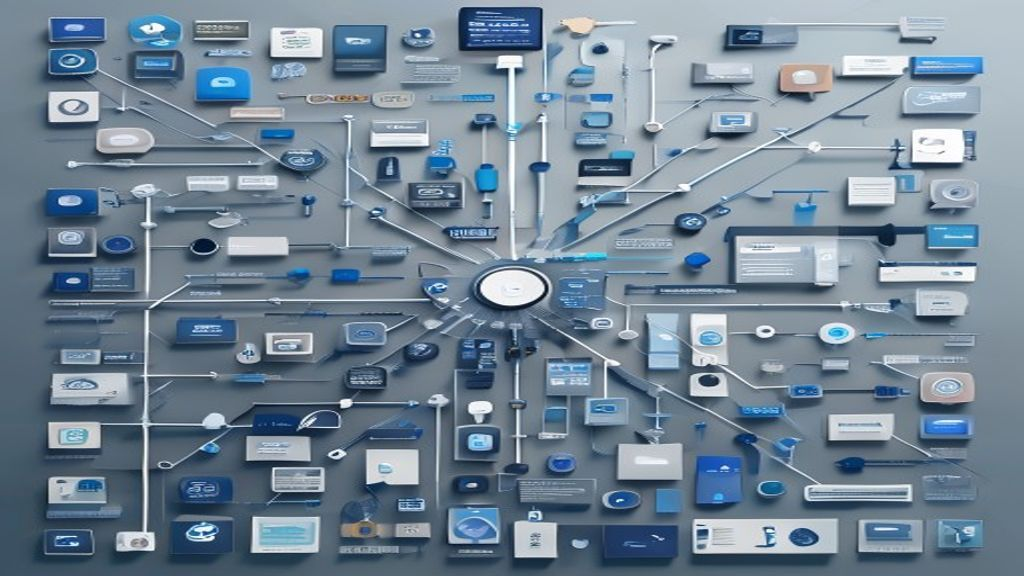
Your marketing team uses one platform for email campaigns, your sales team lives in spreadsheets or a basic CRM, and customer service has its own ticketing system. When a salesperson calls a prospect, they have no visibility into whether that person recently downloaded a whitepaper or submitted a support ticket. This fragmentation results in a disjointed customer journey and prevents your team from having informed, contextual conversations. For a director, it makes a 360-degree view of the customer impossible, turning forecasting into an exercise in guesswork.
Architecting the Automated Pipeline: A Stage-by-Stage Blueprint
The goal of automation is to build a systematic, repeatable, and measurable process that guides a lead from initial interest to a closed deal with minimal manual friction. Here’s how to structure it, stage by stage.
Stage 1: Automated Lead Ingestion & Scoring
The moment a prospect fills out a form on your website, downloads a brochure, or sends an inquiry email, the clock starts. An automated system instantly captures this lead and enriches its profile. Instead of manual assignment, you can set rules:
- Round-Robin Assignment: Automatically distribute new leads evenly among your sales team.
- Territory-Based Assignment: Route leads to the appropriate rep based on geographical location or industry vertical.
- Lead Scoring: Assign points based on specific criteria (e.g., +10 for a manager title, +20 for a manufacturing company, -5 for a free email address). Leads surpassing a certain score are immediately flagged as ‘Hot’ and prioritized.
This ensures a response within minutes, not hours or days, dramatically increasing your chances of engagement.
Stage 2: Intelligent Nurturing & Task Management
Not every lead is ready to buy today. This is where automated nurturing comes in. Based on a lead’s score or status, the system can trigger a pre-defined sequence of actions without a salesperson lifting a finger:
- A ‘Warm’ lead might receive a series of 3 educational emails over two weeks.
- If the lead clicks a link to your pricing page in one of those emails, the system can automatically create a high-priority task for the assigned rep: “Call [Lead Name] – showed interest in pricing.”
- If a lead goes dark for 30 days, the system can move them to a long-term nurturing campaign and free up the salesperson to focus on more active opportunities.
This systematizes the follow-up process, ensuring no lead is ever forgotten while allowing your team to focus their energy where it matters most.

Stage 3: Streamlining Proposals & Closing
The bottom of the funnel is often a bottleneck filled with administrative hurdles. Automation can drastically accelerate this stage. Imagine a salesperson moving a deal to the ‘Proposal’ stage in the CRM. This single action can automatically:
- Generate a customized proposal using a pre-approved template, pulling in the client’s name, products discussed, and pricing.
- If the deal value exceeds a certain threshold, send an approval request to you, the Sales Director, which you can approve with a single click from your email.
- Send the approved proposal to the client via a trackable link, notifying the salesperson the moment it’s opened.
This reduces the time from verbal agreement to signed contract from days to mere hours.
The Real ROI: Translating Automation into Boardroom Metrics
Implementing a new system isn’t about technology for technology’s sake. It’s about measurable business outcomes that you can report to your CEO. An automated sales pipeline delivers tangible ROI in three key areas.
Metric 1: Opex Reduction Through Time Reclamation
Consider a team of 10 salespeople. If automation saves each rep just 5 hours per week from manual data entry, follow-up reminders, and report building, that’s 50 hours of productive time reclaimed for the entire team every week. That’s more than one full-time employee’s worth of selling activity added back to your organization without increasing headcount. This directly impacts operational expenditure and boosts team productivity and morale.
Metric 2: Increased Conversion Velocity
Speed wins deals. By ensuring immediate lead response and consistent, intelligent nurturing, you fundamentally shorten your sales cycle. Prospects are engaged when their interest is highest. Deals don’t stall because of forgotten follow-ups. A 15-20% reduction in the average sales cycle length is a realistic outcome, which means revenue is recognized sooner and your team can handle more opportunities per quarter.

Metric 3: Unprecedented Forecasting Accuracy
When every interaction, email, and stage change is automatically logged in a central system, you eliminate guesswork. You gain a real-time, data-driven view of your entire pipeline. You can see conversion rates between stages, identify where deals are getting stuck, and forecast future revenue with a high degree of confidence. This transforms your role from a sales manager to a strategic business leader who can make informed decisions based on hard data, not intuition.
Accurate forecasting isn’t about predicting the future. It’s about having a system so transparent and disciplined that the future becomes a logical conclusion of today’s activities.
From Blueprint to Reality: The Toco Solution Approach
Understanding the blueprint for an automated pipeline is the first step. The second, and more critical, step is implementation. Many businesses fail here, attempting to stitch together a dozen different subscription-based apps. This creates a fragile, expensive, and difficult-to-maintain system—the very data silos you were trying to eliminate.
At Toco Solution, we specialize in implementing a truly unified platform. We architect and deploy end-to-end digital ecosystems, with Bitrix24 as a powerful core, specifically for the complex workflows of the Manufacturing, Construction, and Retail industries. We don’t just sell software; we engineer solutions that eliminate operational friction.
Consider a hypothetical client, a mid-sized manufacturing firm, “PT Cemerlang Steel.” Their sales team struggled with long quoting processes and poor handoffs to the production team. By implementing a unified CRM and workflow automation, we achieved the following:
- Automated Quoting: A salesperson enters project specifications, and the system automatically generates a quote based on real-time material costs and labor estimates, cutting quote generation time by 70%.
- Seamless Handoff: When a deal is marked “Closed-Won,” the system automatically creates a production order, assigns tasks to the operations team, and schedules the project kick-off, eliminating communication errors and delays.
- Complete Visibility: The Sales Director now has a single dashboard showing the entire pipeline, from initial lead to final delivery, providing unprecedented control and forecasting accuracy.
This is the power of a single, integrated source of truth over a patchwork of disparate tools. It’s about building a robust, scalable engine for growth, not just applying a temporary fix.
Stop Managing Spreadsheets. Start Engineering Growth.
If you are ready to move beyond manual processes and build a predictable, high-performance sales engine for your team, the first step is a conversation. Let our experts show you how a custom-automated pipeline can transform your team’s performance and deliver measurable ROI.
Contact a Toco Solution representative today for a complimentary, no-obligation process audit. Visit us at https://tocosolution.com.